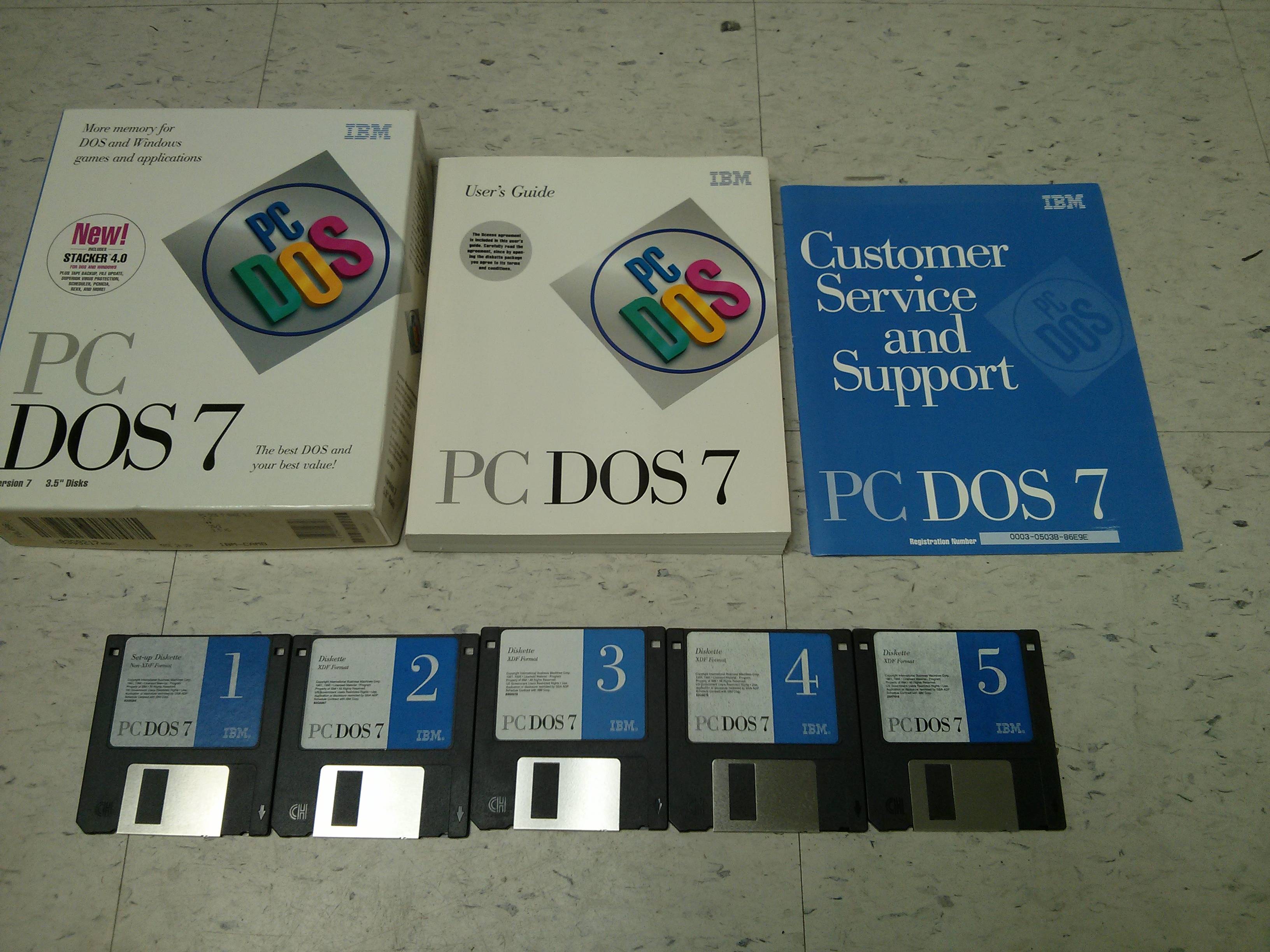
DOS installation floppy disks and manuals — nostalgia, anyone? [Image]

March 13, 2013 27 Email article | Print article

pc_dos_7

I was too young to use it but I’m sure this image sweeps a wave of nostalgia over many of you.

[via Reddit]

27 Comments »

  1. AFPhy6 March 14, 2013 at 7:35 AM (comment permalink) -

    [@Tenderfoot]

    Well, I suspect that there are others here who have memories like the following, but no one has shared it yet:

    Back even before the PC craze, but only a little before it, in 1972, I was key programmer on a Data General Nova machine. It must have had about 64kb of “core” (little iron magnetic donuts) memory, accessed tape drive for archive access and storage, and the main working storage was two hard drives with removable platters that were about 14 inches diameter, and weighed about 8 pounds, it seems. I believe they handled about 50Mb of data, but most importantly, in my mind, was that their first 512byte sector was written with the “bootloading” program for the operating system. That instructed the computer as to how to load the rest of the operating system.

    We tried to keep the computer on all the time, because if it lost power, that first sector had to be copied into the computer’s memory and run. There was no such thing as a non-volatile “BIOS” that has been present on all commercial PCs since the 80s, so… Core memory did “persistent” without power but for a reason I don’t recall right now, about twice a month, I had to recover from a total loss of that memory.

    The way that first sector, the bootloader, was read into memory after a power on, was entering a 40word(double-byte) “bootstrap” program into the computer’s memory via switches. There were about 20 switches on the front panel, 16 of which corresponded to directly setting each of the 16 bits in that word to 1(on) or 0(off). Another toggle switch was depressed to either select that particular memory location, or to “enter” that particular word as an instruction into the current address of memory. Fortunately there was a way to quickly increment to the next memory location, instead of setting the switches for each word to be entered.

    There was also a row of 16 little neon(? possibly LED) lights on the panel, that displayed each bit of that word, (and those blinkin’ lights were active while the computer was running) so you could verify each program location.

    It was a bit tedious, and entering and reading 40words of sixteen 1s and 0s could be fraught with error and required a lot of patience. Hex was a great innovation that I really appreciated when it became possible to enter machine language that way!

    Yep, those were the days… Using binary machine language to bootstrap the boot sector, and programming in assembly language… You really learn to appreciate exactly what a computer is doing. Sigh :^)

    26
  2. Merlin March 14, 2013 at 8:42 AM (comment permalink) -

    Actualy I still have my TI 99-4A.
    Those were the years of the BBC Acorn, VIC-20, ZX-spectrum and so on.

    I also used to program on an IBM system34 with those realy large fishtank like workstations. The programming language was RPG which had nothing to do with role playing games.

    My first hard drive in a PC clone was a ‘large’ 10 MB. :^D
    Quite small compared to todays 2 TB drives…

    27

Leave A Response »