
I have never really been a fan of memory optimization programs. The reason for this is most of the memory optimization programs I have come across actually make your computer slower(as opposed to faster) because of the way they are designed to work and the lack of effectiveness. Up until now whenever asked to recommend a memory cleaner, I have always pointed people towards AnVir Task Manager. AnVir Task Manager has a really nice memory cleaning tool that works differently than the average memory cleaner. In layman’s terms, instead of the industry standard of “overloading” the memory to force Windows to clean up memory usage (this is the reason why you will notice many memory cleaning programs almost freeze your computer while cleaning up your memory) AnVir Task Manager sort of “resets” the memory usage of a program as if the program was just turned on. This approach to memory cleaning is about the best memory cleaning approach you will find because it is quick and effective for memory leaking software. Now that does not mean a AnVir Task Manager will solve your RAM woes (only buying more physical RAM will do that), but it is a nice supplement to have.
While I have been recommending AnVir Task Manager, many dotTechies have been telling me “Ashraf, Ashraf, be cool like us and get CleanMem – it actually works!” Today I thought my self “Enough is enough… I want to be cool too!” So I decided to give CleanMem a go; and I must say the buzz around CleanMem is well deserved because it actually works.
You see CleanMem works a lot like AnVir Task Manager in terms of cleaning memory. For the more technical people the developer has a more technical explanation of how CleanMem works (calls API, blah, blah) on his website so read that if you are interested. I will rather explain it for us simple people this way: instead of the typical lets-overload-the-memory-to-force-memory-cleanup approach, CleanMem sort of “resets” the memory usage of a program just like AnVir Task Manager. To make the cake taste even better, CleanMem does not stay on in the background like other programs. Instead when you install CleanMem it sets itself (via Windows Task Scheduler) to run every 30 minutes (you may change this… just go to Windows Task Scheduler). So every 30 minutes CleanMem runs automatically and instantly “resets” the memory usage of all running processes. It does it very quickly (it comes and goes in literally half a second) and without putting any load on your computer (uses ~1 MB RAM and little to no CPU) so you may even forget it is running. Please note that there is no interface to CleanMem. It does its thing and goes away so you never see it. While CleanMem is set to automatically run, you may manually launch CleanMem at any time but you will still never see an interface to it.
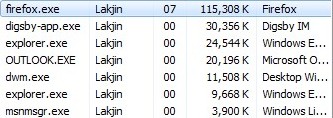
To convince the skeptics, I did a real-life test of CleanMem. Here is my memory usage of some running processes before I run CleanMem:
Here is after I run CleanMem:
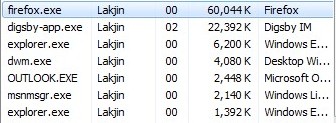
Amazing isnt it? Especially note the drop in RAM usage of the most notorious memory leaking program out there: Firefox. Keep in mind this memory cleaning was done instantly and without any load on my computer by CleanMem. As I already mentioned, CleanMem does this memory cleaning every 30 minutes automatically so even when the programs go back to leaking memory, they will be dealt with on a regular basis.
As I already mentioned, if you have a RAM shortage problem, the best way to solve that is to purchase more RAM. Memory cl

eaners are just supplement programs – they are not replacements for the actual hardware. In terms of supplement memory cleaners, CleanMem is one of the best ones out there. I highly recommend it.
You may download CleanMem from the following link:
Supported OS: Windows 2000/XP/2003/Vista/ 2008/7
Version Reviewed: v1.4.2





Email article


Ram Booster is good but MemTurbo is awesome. Windows does what the software everyones talking about here. It just starts windows ram cleaner. Junk if you ask me.
the current CleanMem v1.50 memorably crashes Win XP SP3 with 3GB RAM.
– the portable brings a blue screen like in the good old days of DOS
– the installed app freezes everything, period.
No memory dump, no crash log, no message. Therefore, crap to me.
What is so funny to me is that Macintosh computer have always been far better at memory management that Windows systems. I have used both side-by side since the mid-80s and have noted this from the start.
To make it doubly interesting, Mac systems have always been capable of handling more memory than Windows. I had a Mac SE with 4 MB of ram (sound pitiful now) when Windows was 640 KB.
I have often wondered why, when Microsoft copied so many other features from the Mac OS, they have never improved their memory management but left it to 3rd party vendors co correct their oversight.
Tried to download from MajorGeeks — virus, then a trojan detected. How nice.
@D.H: It’s probably a false positive. Avira detected it as a virus some time ago, but it’s all fixed now.
Hi Ashraf,
Thank you for the cleanmem!It works nicely on my vista 32 home premium and I can see performance improvement!I like this-it is silent and does its job beautifully!
@loonacycle:
Some form of Gizmo still exists. There is also a daily email.
How does using this compare with using Process Lasso
RAM booster software is very good, can release large amounts of memory without interrupting our work.
@Asrahs:
I used RAM Booster when I still had one PC left to care for. I was very happy with its performance. Windows itself is not as pleased with too many add-ons, though. It seems that, when you have several, they cause conflicts and system crashes. I learned to disable the ones I didn’t need at the moment and only have a couple of them running at any time. I’m not sure the Mac OSX doesn’t have the same problem, but I don’t need more than two or three add-ons anyway.
Just wondering why one should use a memory cleaning program. All modern OSses do that automatically when a program requires more memory than what is currently available. And until such a program forces the OS to reclaim memory, it is BETTER to leave the running programs use the memory they want, even if they consume more memory than the amount they really need, as if they need to use a new chunk of memory for new data, that chunk will be immediately available. On the other hand, after having used a memory cleaning app, they will have to request the memory to the OS, and that operation takes longer.
So, IMO, all memory cleaning tools actually slow down your computer, and that’s not related to the way they operate, the APIs they use, etc. Just leave Windows clean the memory when it knows it has to do it, and your system will be perfectly optimized.
Someone may argue that Windows does not reclaim the memory “lost” by bugs of a memory leaking program. That’s probably true, but all other memory optimizers programs do exactly the same thing, because a chunk of memory that has been allocated and then lost stays allocated until the process that has allocated it is terminated. So, there is no way to reclaim those lost chunks, except by closing the application. And if you close the application, you don’t need a program to reclaim the memory, as it is not lost nor allocated any more.
Speeding the computer up by optimizing the memory is a myth, unfortunately very persistent.
Windows, even Win 7 does not do a very good job of plugging memory leaks. So memory optimization tools do help. The difference, unless you have been running a lot of programs without quitting (not minimizing) them, the difference usually isn’t that great.
Memory calls are conducted and handled at bus speeds so it is doubtful that most people could notice anything that takes considerably less than one second. If many memory calls are being made and some not being answered successfully (out of memory) the system may slow down by using virtual memory.
Really, the best solution is to max out your memory. Quit any unused programs and use the memory optimizer as a last resort. The resources used by a running optimizer can exceed any gains from it unless you already have a major memory mess.
@ r0lZ
He is right folks, I used this CleanMem for several days and noticed a few of my programs were locking up. I uninstalled CleanMem and things are working normally again. I for one am leaving it up to Vista to control my memory usage. I would never “bad mouth” a software program unless I noticed a change in the my computer, either good or bad.
avast and or immunet identified this v 2.2. as a virus!
I am worried.
It might also be worth looking at Memory Booster (http://majorgeeks.com/Datum_Memory_Booster_d7518.html). This works like CleanMem in that it uses APIs for gaining memory. Works well for me. Reduces crashes greatly.